
How does a savings account work?
By Jennifer A. DiGiovanni

Key takeaways
- You can open a savings account online or by visiting your local bank branch.
- You have multiple options for depositing money into your savings account.
- Most savings accounts allow you to earn interest on your balance.
Savings accounts give you a safe place to let your money grow. If you want to stash away extra cash, opening a separate bank account strictly for saving helps you learn how to budget and create healthy financial habits. Banks offer a range of savings account options to help you achieve these goals, and some require only a small opening balance. So, how does a savings account work? We'll go over the basics here.
Savings account basics
Banks typically offer both savings and checking options to meet the financial needs of their customers. Think of a checking account as a hub for money management, where you can deposit your paycheck, withdraw cash for daily spending or pay bills. Alternatively, savings accounts provide you with the opportunity to store additional funds that aren't needed for immediate purposes. Savings accounts often pay interest. Checking accounts usually do not.
Why do you need a savings account?
Life can be unpredictable, and you never know when a situation will arise that requires an inflow of cash. If the heater breaks down during a January freeze, look to your emergency savings fund to cover a repair or replacement cost. Having this cash available in a savings account can ease financial stress when faced with these types of unexpected expenses.
Good savings habits also help you to reach important financial and personal goals. Aside from emergency needs, building cash savings helps you accomplish these goals, such as buying your own home, taking a well-deserved vacation or starting a family. Long-term savings can also help pay for college for you or your kids. When you develop a habit of saving money, you'll feel better equipped to achieve your vision for the future.
How to open a savings account
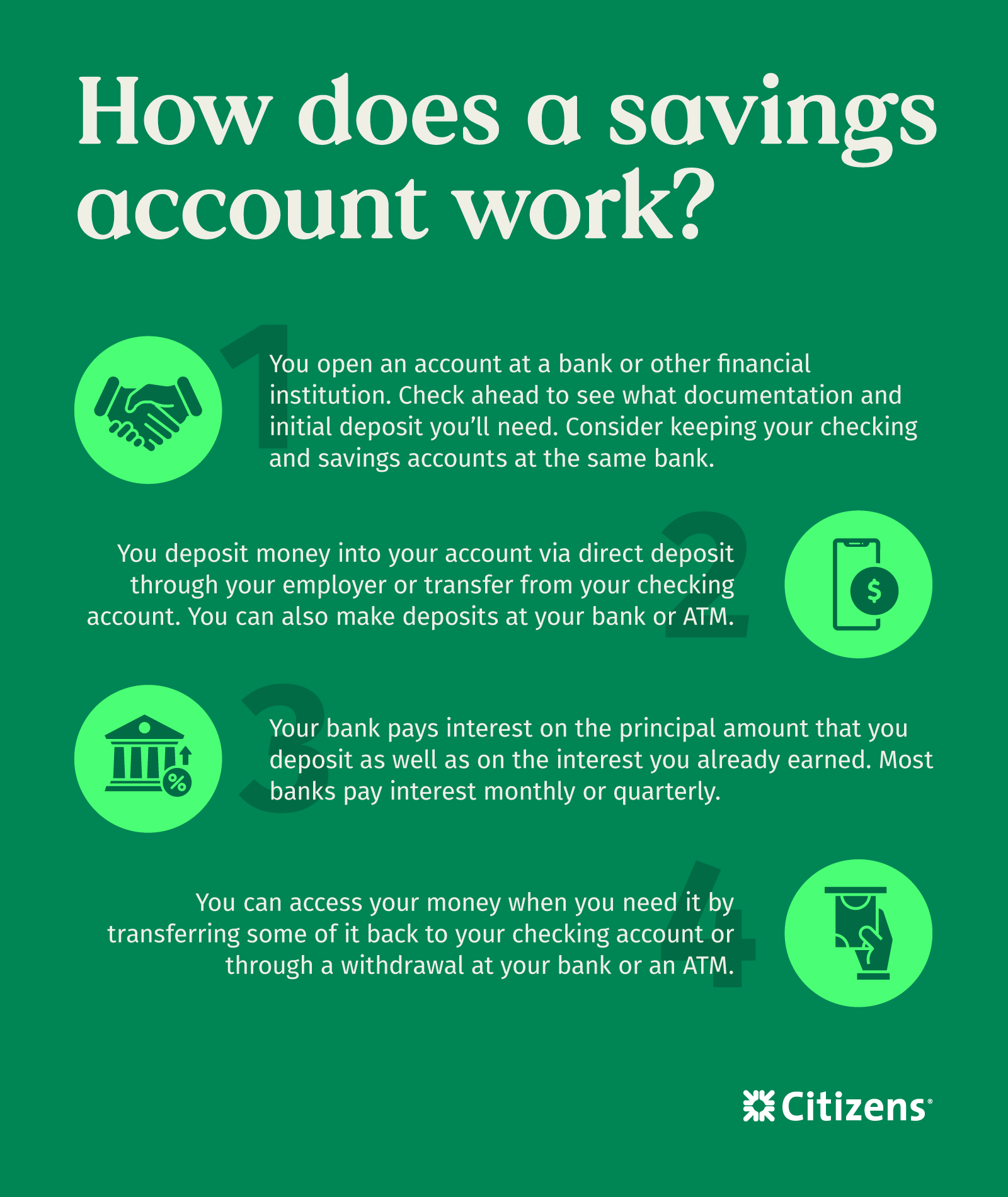
You can open a savings account online or in person at a bank branch. If you currently have a checking account, you may wish to use the same bank for savings, as this will enable you to transfer money between accounts quickly and securely. Established bank customers may also receive preferred interest rates or terms when opening multiple accounts.
Prior to choosing a savings option, take the time to read over the account terms and conditions, or speak with a banking assistant. Pay attention to restrictions, such as a required minimum balance or a limited number of withdrawals each month. Some savings accounts may charge added fees, especially if your balance drops below the minimum, or you make frequent withdrawals.
When you're ready to open a new account, you'll need to provide documentation such as a driver's license to verify your identity. Personal information like your date of birth, social security number and home address will also be requested for tax reporting purposes. Finally, you'll need to provide an initial deposit through a funds transfer, or in the form of cash or a check.
How do you put money in a savings account?
Once you've opened your savings account, it's a good idea to establish a regular savings routine to help you build funds and reach your goals. Options for depositing money into the account include:
Direct deposit: Ask your employer about sending a portion of your paycheck directly to your savings account. This makes saving automatic and avoids the temptation to spend everything that lands in your checking account.
Automatic transfers: See if your bank allows you to set up an automatic transfer from your checking into your savings account. You can pick the frequency and the amount, allowing you to save without having to remember or go out of your way to do it.
Online banking: If you don't have time for a trip to your local branch, sign in to your online banking account, or use a banking app that links your accounts. Transfer money from checking to savings or a deposit a check without leaving your home. Many banking apps offer additional savings features as well, including the capability to scan and deposit paper checks.
ATM or branch deposit: Linking your ATM card to your savings account allows you to deposit extra funds you receive, such as a birthday gift or a bonus check. You can also take checks or cash directly to the bank branch and make an in-person deposit.
Open a savings account that works with your life
Savings accounts can be used to accomplish a multitude of purposes, from vacation savings, to building an emergency fund or securing a down payment on a house. You can choose an option that best meets your needs. At Citizens, we're here to assist you with finding a savings account that will pave the way to achieving your goals, and more.

How to start an emergency savings fund
Emergency savings provide liquidity when the unexpected happens. Keep your mind at ease by becoming financially prepared for whatever life throws your way.

How to create a budget
Budgeting can make it easier for you to save money. Learn how to get started here.

4 easy tricks to become better at saving money
Get our tips for developing savings habits to help achieve your financial goals.
© Citizens Financial Group, Inc. All rights reserved. Citizens Bank, N.A. Member FDIC
Disclaimer: Views expressed may not necessarily reflect those of Citizens. The information contained herein is for informational purposes only as a service to the public and is not legal advice or a substitute for legal counsel. You should do your own research and/or contact your own legal or tax advisor for assistance with questions you may have on the information contained herein.