
Credit monitoring 101: Benefits, alerts and tools

Key takeaways
- Credit monitoring helps you track changes to your credit reports and alerts you to new activity like hard inquiries, new accounts and missed payments.
- Monitoring your credit makes it easier to stay on top of your credit health and to prepare for important financial decisions, such as applying for a loan or renting an apartment.
- You can use the credit monitoring tool in the Citizens mobile app* to check your credit score, access your credit report and monitor when your credit file changes.
Credit report changes happen all the time, but some updates matter more than others. Something as simple as a missed payment or carrying a high credit card balance could hurt your credit score. By paying attention to credit changes, you can spot potential problems early and understand how your financial habits affect your credit over time.
One of the best ways to track changes in your credit report is to use a credit monitoring tool that sends real-time notifications when new activity appears on your credit report. These won't stop credit changes from happening, but they can alert you to suspicious or unexpected activity that shows up on your credit file.
What is credit monitoring, and why is it important?
Credit monitoring is a tool that tracks activity on your credit reports with one or more of the major credit bureaus: Equifax, TransUnion and Experian. Many credit monitoring services send you email, text or mobile alerts when certain changes appear on your credit file.
It's important to keep an eye on your credit reports because your credit can affect everyday financial decisions beyond borrowing money, including renting an apartment, setting up utilities or qualifying for lower insurance rates. So earning and maintaining good credit matters. Additionally, you want to make sure that the way you manage your credit keeps your credit reports and credit scores healthy, both now and in the future.
You can review your credit reports for free once a week at AnnualCreditReport.com. Still, checking your credit reports alone won't tell you when changes take place on your file. A credit monitoring tool, however, can alert you to new activity like:
- Balance changes
- Hard inquiries
- Missed payments
- New accounts
- Credit score fluctuations
- Potential fraud
Keep in mind that credit monitoring won't prevent fraud, fix credit mistakes or improve your credit scores. But it can alert you as soon as important changes occur, so you can take action. Credit monitoring also gives you a clearer picture of how your financial habits affect your credit scores, which enables you to make adjustments when needed.
Benefits of credit monitoring
It takes effort to keep track of your three credit reports, but credit monitoring can make the process a lot easier. Monitoring your credit consistently comes with several key benefits:
- Helps you stay informed: Many credit monitoring tools track changes in your credit report in real time. When new accounts, payment activity changes, balance updates and other important updates happen, you receive an alert.
- You can spot potential fraud: Receiving alerts about unfamiliar accounts or hard inquiries you don't recognize makes it easier to notice and respond to suspicious activity earlier. Of course, alerts alone won't prevent identity theft or fraud. But they can let you know if there's a problem so you can look into the situation.
- There's no credit score impact: Checking your own credit reports or using a credit monitoring service will never hurt your credit score. Rather than hard inquiries, these tools generate soft credit inquiries, which don't factor into credit score calculations.
- Easier to track credit progress: If you're working to improve or build your credit, monitoring makes it easier to keep up to date on your progress so you can make adjustments along the way.
- Builds awareness of how actions impact credit: Credit monitoring tools can help you analyze how habits affect your credit. Tools enable you to track how on-time payments, debt reduction and credit utilization habits impact your credit health from month to month and over longer periods.
Credit monitoring within the Citizens mobile app*
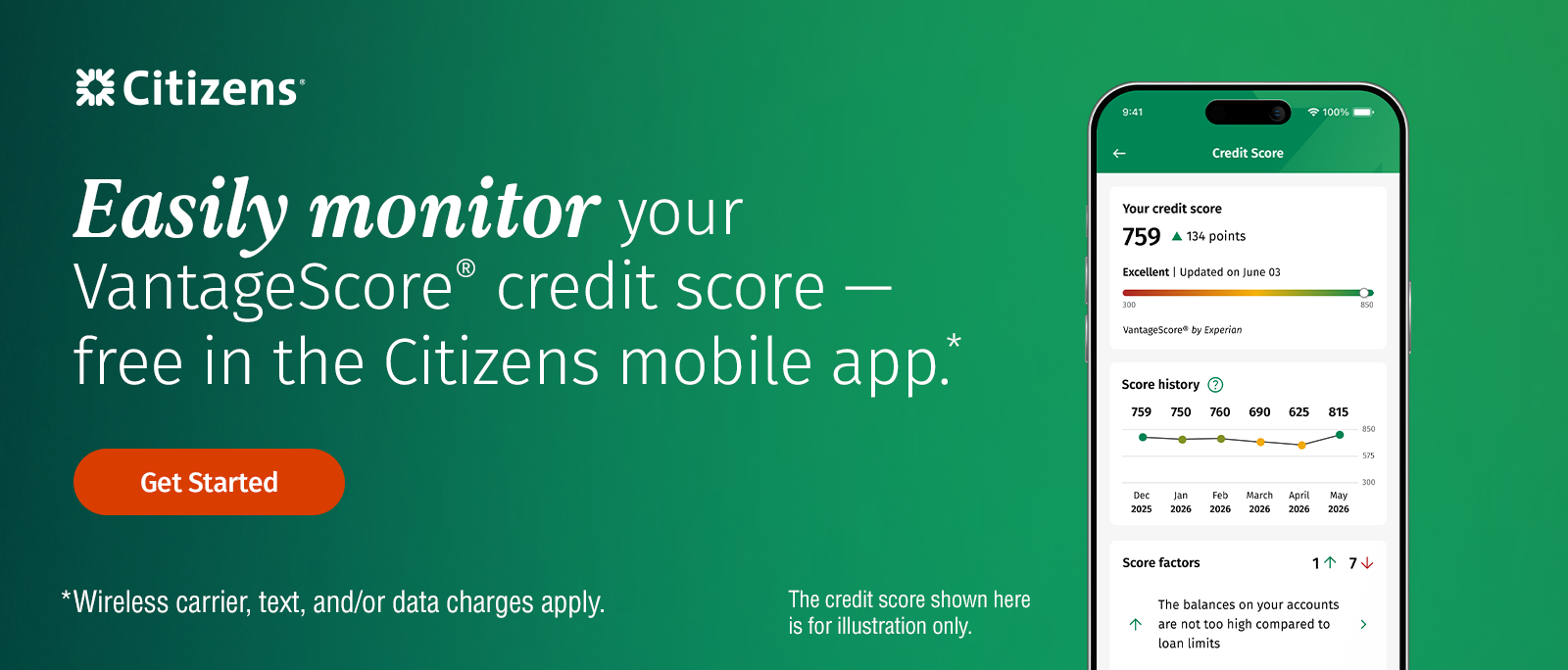
The new credit monitoring feature within the Citizens' mobile app* makes it easy to check your credit in the same place you manage your other finances. You can enroll directly through the app to access credit monitoring and stay informed about your credit health.
Key credit monitoring features include:
- Access to your credit score and score history
- Access to your full Experian credit report
- Insights into score factors that may influence your credit health
These tools can help you learn what affects your credit score and track your ongoing credit progress without needing to manually review credit reports. Regularly checking your credit score alongside your bank accounts in the mobile app can help you understand what's impacting your credit in real time to better manage your overall finances.
5 helpful credit monitoring features
Credit monitoring tools can alert you to several different types of activity on your credit report. Below are five helpful credit monitoring features and how they work.
1. Notable credit score changes
Many credit monitoring services also track your credit score and notify you when significant changes occur. An increase in your credit score may reflect positive habits such as reducing debt or making consistent, on-time payments.
A sudden drop in score, however, could indicate problems. Higher credit card balances, missed payments or new negative information on your credit report are all possible reasons your credit score might decline.
2. New accounts or credit inquiries
A credit monitoring tool can help you monitor when a new account appears on your credit report or when someone accesses your credit file, such as after applying for a new credit card, auto loan or mortgage.
Credit monitoring may also help you catch suspicious activity on your credit report. If you receive a notification about a new account or hard inquiry you don't recognize, it could be a sign that someone attempted to apply for credit in your name.
3. Changes to balances or credit utilization
Many credit monitoring services notify you when account balances increase or decrease significantly. These make it easier to watch your credit utilization ratio, which compares your credit card balances to your available credit limits.
Seeing the impact on your credit score firsthand can encourage better habits. For example, if you notice that maxing out a credit card lowers your credit score, it may motivate you to keep your credit utilization ratio lower. Paying down credit card debt can improve your credit health and may also help you save money on interest charges.
4. Updates to personal information
Some credit monitoring tools alert you when personal information on your credit report changes, including your address, phone number, employer information or name.
These types of updates may be accurate and expected, but unfamiliar changes to your personal details could indicate identity theft or credit reporting errors. If personal information on your credit report changes without your authorization, review your full credit report and report any forms of fraud.
5. Late or missed payments
Payment history plays a key role in your credit scores. Credit monitoring tools can notify you when a creditor reports a late or missed payment on your credit file. These can help you catch problems faster, especially if you accidentally overlook a due date or inaccurate payment information shows up on your credit file.
Frequently asked questions about credit monitoring
Does checking my credit hurt my score?
Checking your own credit reports or scores will not hurt your credit score. Credit monitoring tools use soft credit inquiries, which don't affect your credit health. But hard inquiries when you apply for new financing may negatively impact your credit scores.
How often should I review my credit?
Many consumers benefit from checking their credit reports at least once a month and reviewing alerts whenever they receive notifications from a credit monitoring service.
Does credit monitoring help prevent fraud?
Credit monitoring does not automatically prevent fraud or identity theft. But if you receive a credit monitoring alert and review it, you may be able to identify suspicious activity sooner and address potential problems before they grow bigger. Learn how to prevent and report fraud by visiting the Citizens Fraud and Security Center.
Credit monitoring helps you make smart financial decisions
Paying attention to your credit reports and credit scores makes it easier to notice potential problems faster and make more confident financial decisions over time.
Monitoring your credit regularly can also help you understand how everyday habits like paying bills on time and managing debt impact your credit health. Explore the credit monitoring features available within the Citizens mobile app to stay informed and track important changes in your credit report quickly and easily.
Related topics

When you're busy, use CiZi: Citizens mobile app* chat feature
Your personalized digital assistant in the Citizens mobile app* can help you manage accounts, make deposits and report fraud.

How to build credit
Building good credit enables you to borrow for big expenses like education or a home purchase. Explore six key tips.

How is your credit score calculated?
Your credit score is a combination of your payment and credit history, recent activity, mix of credit types and how much you owe.
© Citizens Financial Group, Inc. All rights reserved. Citizens Bank, N.A. Member FDIC
* Wireless carrier, text and/or data charges may apply.
Disclaimer: The information contained herein is for informational purposes only as a service to the public and is not legal advice or a substitute for legal counsel. You should do your own research and/or contact your own legal or tax advisor for assistance with questions you may have on the information contained herein.