
How to open a joint bank account

Key takeaways
- A joint bank account can simplify your finances. Both account holders can make deposits and withdrawals, view balances and take care of other banking tasks.
- Couples, parents and teens, caregivers and business partners can all benefit from sharing an account.
- Opening a joint bank account is similar to opening an individual account, but both account holders must submit personal information and agree to the account terms.
When you combine your life with someone else’s, you may also want to join your finances. A joint bank account can simplify bill payments, cut down on the need to transfer money between accounts and make it easier to save for shared goals.
Opening a joint account is an easy process, but it should be done responsibly to ensure that both you and the other account holder agree on how to manage it. Learn who can benefit from a joint bank account and how to open one.
What is a joint bank account?
A joint account refers to who can access and has ownership rights to the money in the account. Both owners can withdraw, deposit and monitor the money in the account. Each account owner is typically issued their own debit card, but depending on the state, minors may not be eligible to receive a debit card. Instead of transferring money back and forth or deciding who’s picking up the check at dinner, joint account holders have the ability and freedom to spend individually or save together as a team.
You can open several types of bank accounts with another person. Some of the most common include:
- Checking accounts
- Savings accounts
- High-yield savings accounts
- Money market accounts
- Certificates of deposit (CDs)
When you open a joint account, both names appear on the account and both people have full access to the funds. Depending on the account type, each person may write checks, use a debit card, set up direct deposit and authorize transfers or other transactions through online banking.
Who uses joint bank accounts?
People open joint bank accounts for a variety of reasons. You can use them to simplify shared finances, help someone manage their money or provide a hands-on way to learn how to create a budget.
Some of the most common joint bank account users include:
Couples
Couples often combine their finances to make household expenses easier to manage. Both partners can make withdrawals as needed for groceries and other essentials, and it also simplifies monthly bill payments. A joint bank account can help couples save for shared goals, like a down payment on a home or vacation.
Senior citizens and caregivers
As family members get older, you may need to help them with their finances. Instead of setting up a power of attorney, some people choose to open a joint checking account if it includes rights of survivorship. If one account holder passes away, the surviving account holder takes full ownership of the account without going through probate.
Parents and teens
Many parents open joint checking accounts with their teens to teach money management skills and give them a safe place to learn how to budget. Parents can closely monitor the account and provide guidance as needed to ensure their teens don’t overspend or forget to make deposits.
How to open a joint bank account: Step-by-step
Opening a joint bank account is similar to setting up individual accounts. Most banks will allow you to sign up online or in person as long as you have the required information for both owners.
Here’s how to get started:
1. Research your options
Not all bank accounts are the same. Some checking accounts offer basic features, while others may include early access to direct deposits, debit card rewards, round-up savings and budgeting tools. Savings accounts may also have different interest rates. Be sure to compare your options to see which account offers the features you need.
2. Select the account you want to open
Determine the type of bank account you need. Checking accounts are ideal for everyday spending. They usually include a debit card, and you can also write checks and pay bills online. Savings accounts are often used to set money aside for goals. They typically earn interest, which helps your balance grow over time.
3. Gather required documents
Having your documents ready before you apply can help prevent delays. You'll likely need to provide the following:
- Government-issued photo ID
- Current address
- Social Security number
- Date of birth
- Funds for the opening deposit
You may need additional documentation depending on your bank's requirements, so always check before opening an account.
4. Apply for an account
You can typically open a joint bank account online, by phone or in person at a branch. You'll need to provide information for both account holders, and each person must agree to the terms. Before signing, review the account details to ensure you understand everything.
5. Fund the account
Most banks require that you make an initial deposit when you open a joint account. Be sure to ask if there's a minimum balance requirement to help you avoid fees.
Pros and cons of joint bank accounts
Opening a joint account can be a strong financial tool, but it's important to be realistic about the potential drawbacks. Weigh these top pros and cons of joint bank accounts to help you decide if one would work for you.
Advantages of joint accounts
- Simpler bill paying: Shared costs, like rent, groceries and utility bills, can all be paid from the same account, so there's no need to track IOUs and paybacks.
- Streamlined budgeting: Using your joint account for shared expenses makes budgeting and tracking your spending a lot easier. You can also use a joint savings account to save for financial goals, like buying a home or saving for a vacation.
- Pass on financial savvy: A joint account with a child can let you monitor their spending and teach them smart financial habits. They'll thank you later.
- Easy access to funds: If only one partner is working, a joint account can make it easier for both of you to transfer money without anyone feeling like they're receiving an allowance.
- Shared financial goals: Sharing an account encourages both owners to communicate about financial goals.
Drawbacks of joint accounts
- Mismatched financial styles: You may be diligent about checking your account balance, but maybe your partner isn't. This could lead to overdrafts and low-balance penalties that affect both of you. In some cases, keeping your money separate may be the better choice.
- You need approval from both parties to close or alter it: Because joint accounts have two owners, both must approve major decisions, such as closing the account or taking one party off of it.
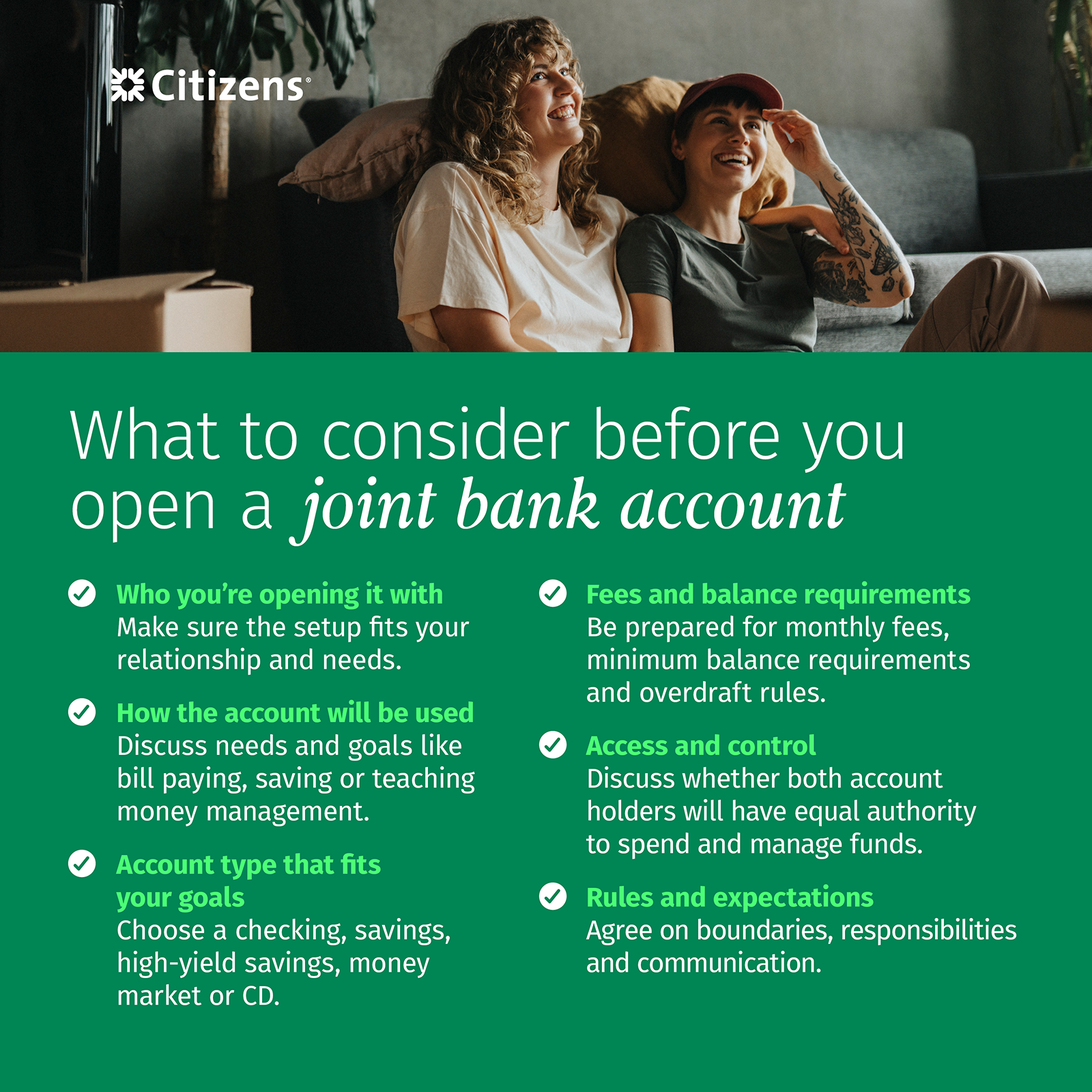
What to consider before opening a joint bank account
Before opening a joint bank account, think through how the account will be used and what features matter most to both account holders. Taking the time to discuss expectations and account options upfront can help you avoid confusion and conflict later.
- Choose the right type of account: Decide whether you need a checking account, savings account or both. Checking accounts may offer features like debit card rewards or early direct deposit, but they can also come with monthly fees or minimum balance requirements.
- Understand savings options: If you'e opening a joint interest-bearing account, keep in mind traditional savings accounts typically have low or no minimum balances, while money market accounts and high-yield savings accounts offer higher interest rates in exchange for higher balance requirements. Certificates of deposit (CDs) often pay the highest rates, but your money must stay in the account until maturity to avoid penalties.
- Align on how the money will be used: Talk openly with the other account holder about spending habits and goals. If your approaches to money differ, keeping some funds in separate accounts may help prevent disagreements.
- Set clear expectations and rules: Both account holders have full access to the money and equal authority to make transactions, so agreeing on boundaries and responsibilities before opening the account is essential.
Joint bank account FAQs
Still not sure if a joint bank account is the right move? Explore frequently asked questions to help you decide.
What is required to open a joint bank account?
When you open a joint bank account, both account holders have to present government-issued identification and provide personal information, like your Social Security number, address and birthdate. Both account owners must also agree to the terms of the account agreement.
Can an unmarried couple open a joint bank account?
Yes, unmarried couples can open a joint bank account. You don’t have to be married or even living at the same address to share an account.
How do joint accounts affect credit?
A credit check isn' required to open a joint account and opening an account won't impact your credit score. Credit checks are typically only performed when you apply for a loan or line of credit, like a mortgage, auto loan, personal loan or credit card.
How do you open a joint bank account online?
On the bank's website, go to the account you want to open and click "Open Account" to get started. Each applicant must submit personal information and upload scanned images or photos of their IDs through the bank’s secure platform. Once your application is approved, the bank will provide your account information so you can make your initial deposit.
Open a joint bank account today
Opening a joint bank account can be a smart way to manage your money. A joint account can make it easier to handle shared expenses, save for the future, assist an aging parent or teach a teen money management skills. The right account can help you reach your goals, provided you and the other account holder both agree on how it should be used.
Thinking about opening a joint checking account? Explore our checking account options to find the features and benefits that support your financial goals.

Budgeting for couples: 6 easy steps for success
Being on the same page financially can help couples reach their shared goals. Explore six steps to help you manage your finances as a twosome.

How do you talk to your partner about joint checking accounts?
A joint checking account can help you and your partner manage shared expenses. Use these five points to kick off the conversation.

How many bank accounts should I have? 4 reasons to have multiple checking accounts
Multiple bank accounts can help you manage your money, but how many you need depends on your personal goals.
© Citizens Financial Group, Inc. All rights reserved. Citizens Bank, N.A. Member FDIC
Disclaimer: The information contained herein is for informational purposes only as a service to the public and is not legal advice or a substitute for legal counsel. You should do your own research and/or contact your own legal or tax advisor for assistance with questions you may have on the information contained herein.